
requiem for a chicken
on sympathy and self-interest.

Recently, I saw a Polish stage adaptation of J. M. Coetzee’s novel Elizabeth Costello, the story of (among other things) a controversial vegetarian academic’s various speaking engagements. This, on top of drafting a chapter of my novel set at a dinner table, has led me to reflect even more than usual about the circumstances under which it is morally tolerable to eat animals. That I waver on this point so drastically and frequently, much to the amused frustration of those close to me, has delivered me to that shady territory of the “plant-forward,” a label only mildly less intolerable than “flexitarian,” that word that signifies its very lack of specific content. The gist is that I avoid animal products whenever I can, or (more honestly) whenever I feel inclined to, which is most of the time. My most notable exception is sharing meals with non-vegetarian friends who express their love through food. Beyond the environmentalist ethic of which my readers are by now, to be sure, quite familiar, my personal abstention from meat has generally stemmed from my conviction, or at least my sense, that I could not bring myself to kill an animal myself. The story below, of my killing one a little bit, is true. It happened in the summer of 2023, when I found myself for a time immersed in a world populated with animals and humans living together, that is to say, a world in which animals were not the symbolic currency, as they are in the world from which I come, of tree-hugging sentimentalism, but were concrete, which is to say, alive, which is also to say apt to kill, and to be killed. Below is what happened.
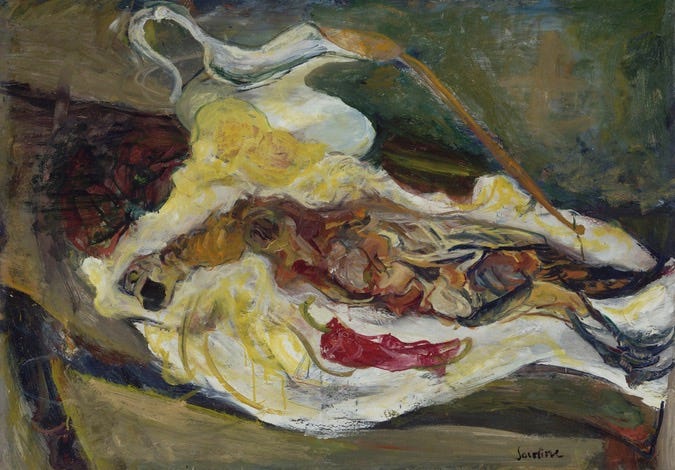
My friend and I were to depart for Samsø on the hourly ferry from the sleepy township of Hou, which had seemed to us at first to be depopulated. The only restaurant in the whole of Hou appeared on Google Maps to be an overpriced pizzeria patronized, we learned as we walked past its window, by no one, so we raided the vegan fridge at the only supermarket we could find and feasted on makeshift charcuterie on the rocks by the breakwater. But after this, waiting for the boat to arrive, we walked up and down the many docks lined with clean white sailboats, and on their decks we found all the people of Hou, gathered around tables of varnished wood eating colorful meals. Not long after, the ferry came. Within an hour we had reached the island.
Samsø is 25 kilometers end-to-end. It sits in the Kattegat, a sort of a bay in the North Sea enclosed on the West by the Jutland Peninsula, which includes the northern bit of Germany and continental Denmark. It is, I would later learn, “the world’s first renewable energy island.” In 2007, it became fully sustainable, meaning in this instance powered by wind and biomass. We drove directly off the Hou ferry, which landed in the tiny neighborhood of Sælvig, onto the road that would take us to the village in the North where we were to work for a time in a farm-to-table café in exchange for food and a place to live. They call this “WWOOFing.”
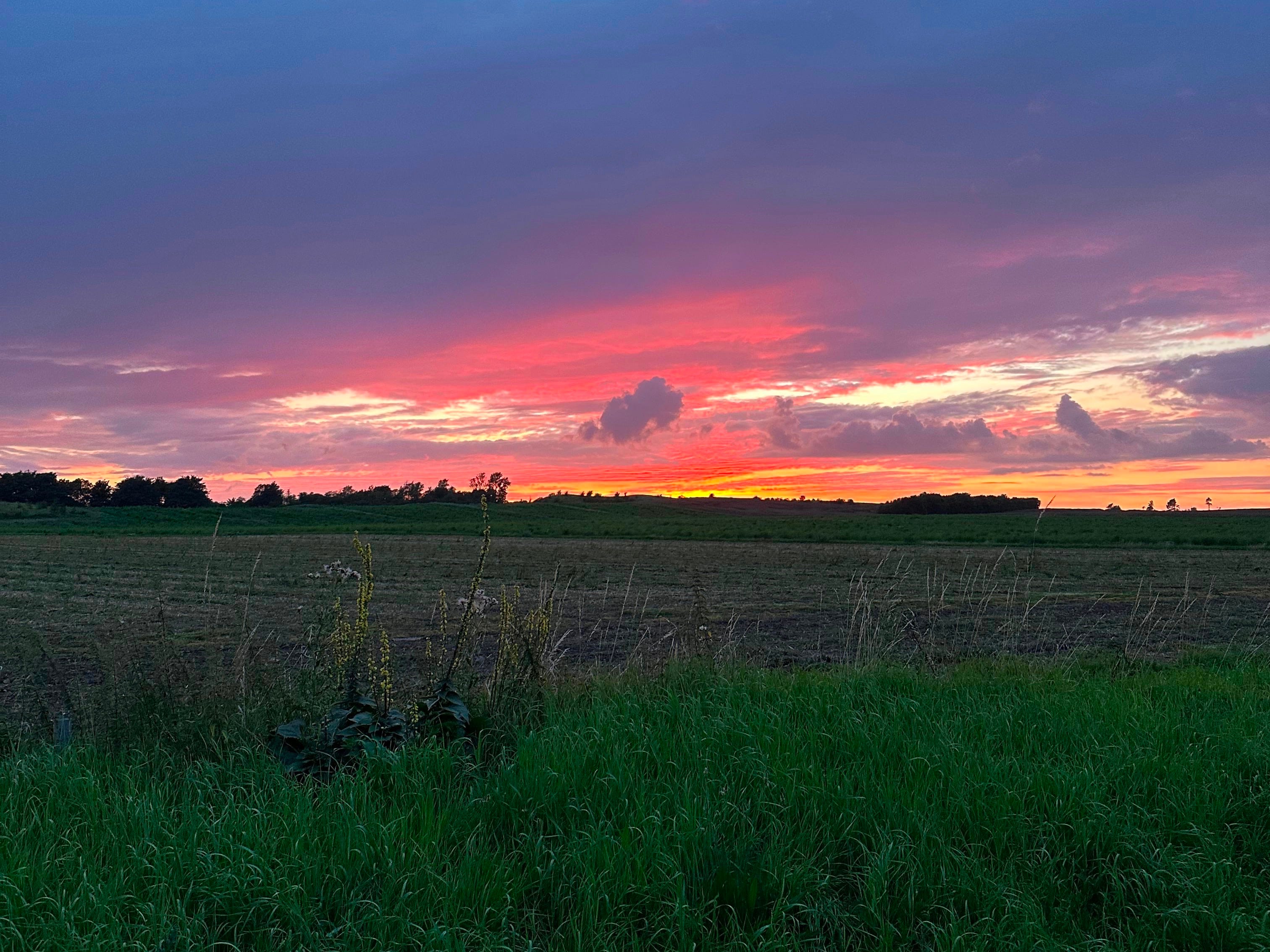
We arrived at the address we had pulled from the WWOOF.dk listing, a restaurant on the village outskirts marked with a painted wooden sign. A woman with pigtail braids and rainbow shoelaces intercepted us there and hopped on her bicycle. “Follow,” she said. Follow we did, to the courtyard of a house a few streets closer to the center of town. A French girl with short bangs, who had been sitting on the front steps smoking a cigarette, rose in her thick pink blanket to greet us. She put on a pair of flip flops, discarded her cigarette butt, and took us inside. The woman disappeared. The French girl gave us a choice between the room that is outdoors, the room through which everyone passes to get to the bathroom, and the room with no blinds, and we chose the last. We made our beds there with mismatched linens from the closet. Afterwards, we came out into the living room to find a crew of twenty-somethings playing with an ancient deck of Cars UNO cards and made our introductions.
The following morning—over the dregs of a bucket of 2% skyr, a slice of bread someone had made, and a cup of instant coffee—a housemate explained that the woman with pigtail braids owned the farm and café with her husband and would make two weekly trips to the supermarket on her bicycle for food for our house, which also belonged to her and where she kept a rota of WWOOFers year-round. A list would be left for her on the dining table, which she would take and assess. Eggs, yes. Nuts, no. Flour, yes. Bananas, yes, in moderation. Apples no longer: the woman had recently discovered you could pick them yourself at the public orchard. Vegetables were always no, as you could pick them from “the fields.” Coffee, always; beer, they brewed eighteen varieties themselves, and every Saturday, at the “beer tasting,” we could each pick one bottle to try.
The calendar attached to the fridge with a magnet indicated that the woman had placed my friend and me on opposite shifts, seemingly to keep us from socializing on the job. My friend spent the morning in the fields with the woman’s husband, while I took a long run before my afternoon shift in the café. I headed south, past an ice cream shop and a music studio, past the vast and wavering wheat fields dusted with flowers, past a cluster of small bed and breakfasts lined with garden patches before hitting a bike path that quickly plunged into a thicket of trees. I smelled the sea before I saw it. Then it was the end of the trees and the beginning of the long expanse of shoreline, a narrow strip of sand between my damp road and the angry gray sea, where small black birds scuttled in white froth.
I returned to the café for lunch, which I came to understand the woman would prepare for us every day in the café kitchen before she opened for public service. This day it was barley, vegetables, and sausage from a pig they had recently killed on the farm (“So it’s good,” someone promised). I thought about the pig, how it was innocent, how it hadn’t deserved to be killed. The environmental reasons for which I generally avoided meat in this context seemed moot. And the moral ones? I could acknowledge then that many people depended on hunting and agriculture to survive and so could not be judged for killing living creatures, but I could also acknowledge that I was generally outside of this circle of humans and inside the circle of those who, having access to supermarkets, and by extension to significant choice, could not so easily justify buying an animal in a package. For this reason I did not, at that time, buy meat in supermarkets. But was this a supermarket? Did I not now inhabit a context in which killing an animal to eat it could be—indeed was—part of a balanced, sustainable, culturally sensitive lifestyle? Wasn’t this woman the steward of a small organic farm, and the meat definitionally “local”—to me? In the end, I ate the sausage not because of these calculations but because after ten miles that morning, I was too hungry to be moral. It was indeed good. My friend, a far more principled vegetarian than I, politely declined.
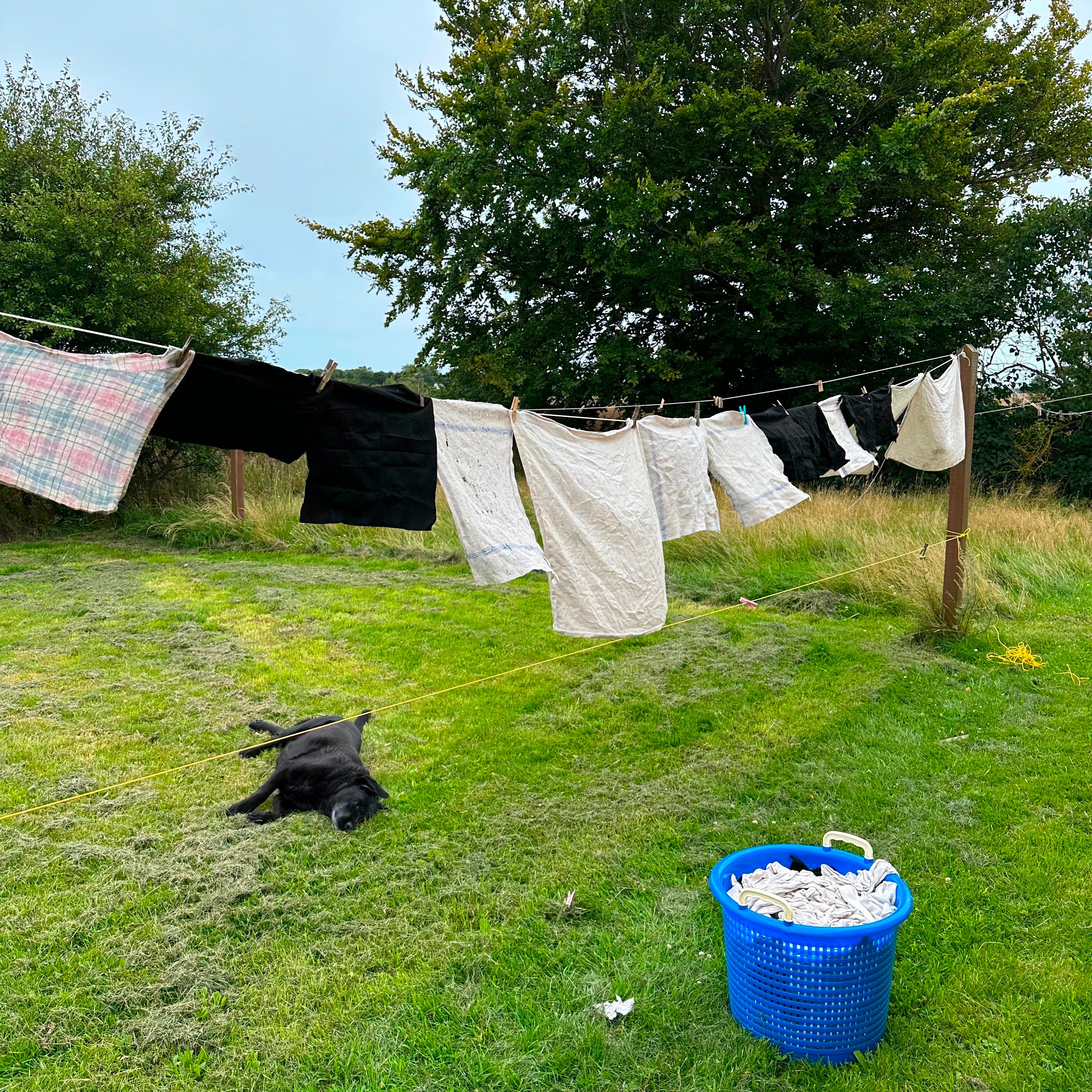
That afternoon, I began with taking the laundry down from the clotheslines outside and bringing it into the back of the café, all cleaning rags and a single pink and orange striped knee sock. I carefully put the sock on the top of the pile in my arms. “That’s my sock,” the woman said, seeing me, and picked it up, then stuffed it in her apron pocket. She eyed me suspiciously as though I had stolen it. Then she took me into the kitchen and taught me how to chop vegetables finely with a large Japanese knife. I was to be introduced, after this, to the vegetable chopping machine, a less elegant contraption than the Japanese knife, into which I fed cauliflower, carrots, broccoli, and onions. I was to slice the beets, dice the bucket of squishy purple plants I didn’t recognize, and pare a basket of squash and zucchini. “Don’t be sad about this,” the woman said, as she threw the large cores into what I had thought was the compost. “The pigs will eat it.”
While I labeled and shelved flour, restocked beer, threw empty bottles into the vat out back, cleared tables, and folded cardboard boxes, I listened to the woman’s conversations with the other WWOOFers she knew better than me, including a piece of gossip about someone who would be placed on the next ferry to Aarhus for saying the dishes were “too dirty to clean.” Shortly thereafter I overheard the person in question asking the woman if she could break her contract and go home; when the woman asked me about it later, I pretended I hadn’t. The woman promptly handed me a plate of meatballs and sent me out to the front room to serve a table of American customers. I said, “Table fifteen!” in American English, but they insisted on thanking me in Danish: “Tak!”
After work, the woman took me and three others in a wagon hitched to the back of her ATV to feed the (surviving) pigs. They ran from the grass towards the electrified fence at the sound of our approach. These ones were eleven weeks old. We lobbed hunks of zucchini at their trough. The woman hurled the full bag of compost. As my legs were longest, the woman nominated me to step over the fence to retrieve a scrap of plastic she noticed in the mud. One of the pigs ran off with something strange. One of the other WWOOFers asked what it was. “Skin,” the woman said. “Of what?” someone asked. “A pig.” Evidently noting our discomfort, she shook her head. “When one of them dies,” she said, “what do you think they will do? We slit one of their throats, in seconds, the others drink the blood. They don’t know better.” At our stunned, discomfited silence, she shrugged. “Well,” she said sagely, finally: “there’s people that eat people, too.” Then the woman told us the story of a pig whisperer who had miraculously corralled an enormous female pig with a single pallet. Someone asked if he used words with the pig or did it only with his eyes. “I don’t know,” she said. “I was too busy focusing on not getting eaten. And she would have eaten me,” she added gravely. A long pause. “Many people think pigs are funny, slowly, and very calmful, but a mama pig is a wild animal.” She loaded us back into the ATV wagon and we left.
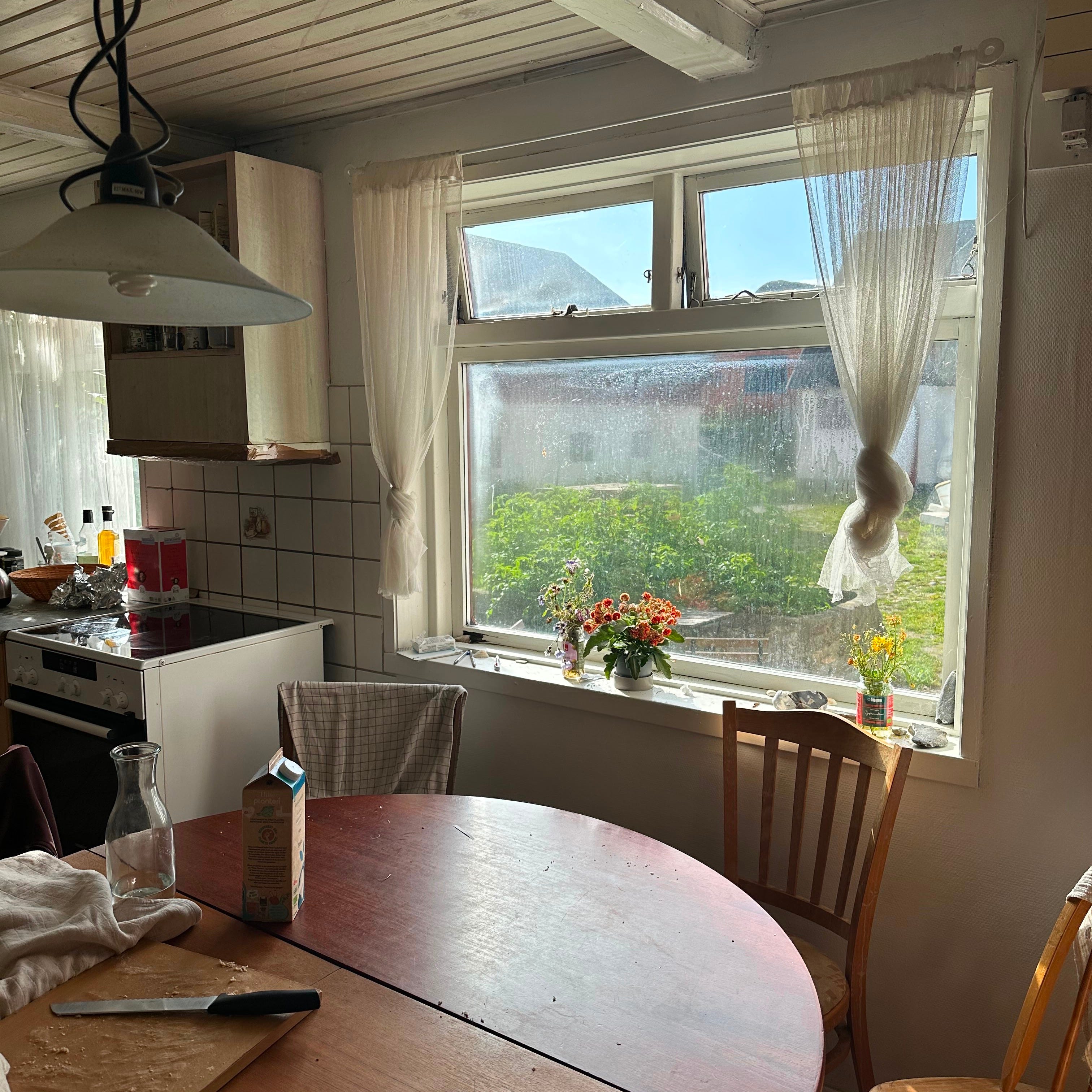
We arrived at the house to find a sexagenarian Swiss woman newly settled in the room through which everyone passes to get to the bathroom. She wore Silhouette glasses and a chiffon scarf. She had a pixie cut. She spoke to the French among us in French, the Austrians in German, and the rest of us in English. Then she pulled out a package of tobacco. “You smoke?” Somebody asked, in disbelief. (She seemed a very healthy woman.) She scoffed. “Yes, I smoke. I also teach yoga, modern dance, and body healing. I climb mountains in the Alps. I horseback ride. And as long as I can do those things, it’s a small—what is it?—a sacrifice. Of something.” I came to know these things about the Swiss woman. I came to know also that in the small town near Marseille where the French girl grew up, a man built a guillotine twenty years ago and guillotined himself.
The following morning, a basket of beautiful bread appeared on the breakfast table. I glimpsed the backside of its messenger on a bike, a man I would soon be able to identify as the woman’s brother-in-law. I drank a cup of black coffee with a spoonful of cacao powder in place of oat milk then cycled on the last broken bike to the café, where I passed the morning cutting potatoes and red onions with the woman, who told me about her children. One was an archaeologist and another married one; two had trained in the food industry; one was a tailor, another a carpenter; the last had wanted to be a bookseller but became a social worker instead because, the woman explained simply, “there are no bookstores in Denmark.” She pulled up many pictures on her phone of her grandchildren eating vegetables and playing in the rain.
The woman, I learned, had, before opening the café, worked as a cook on a ferry. The work environment was bad. One woman lost her eyesight from stress, and after she had a blood clot in her brain, they fired her. I asked if that was legal in Denmark. “We were hired as sailors,” she said. “It is legal to fire a sailor who cannot perform his duties properly.” “But you were cooks,” I said. “But we were cooks.” I asked her if she quit because of all this. “No,” she said. “They fired me after I had surgery on my hand.” I looked at it; it was large and sinewy and handled easily the knife.
The afternoon went to slicing the nibs off the bucketloads of green beans and scrubbing dirt from the ridges in the cucumbers and peeling insects from between the spinach leaves. On the way to the beach from the house after my shift, I cycled back to the café to drop off our grocery list. “First off, I am not buying mushrooms,” the woman said. “You have vegetables in the garden. And hummus?” She tossed me a bag of dry garbanzo beans and a jar of tahini from the shelves. I thanked her, embarrassed, and cycled back to the house, where I left the ingredients in the kitchen with a little note. Then I followed my friend to the quiet, fragrant beach. The water we swam in was still and cold and the sand we sat in to chat was colorful and warm.
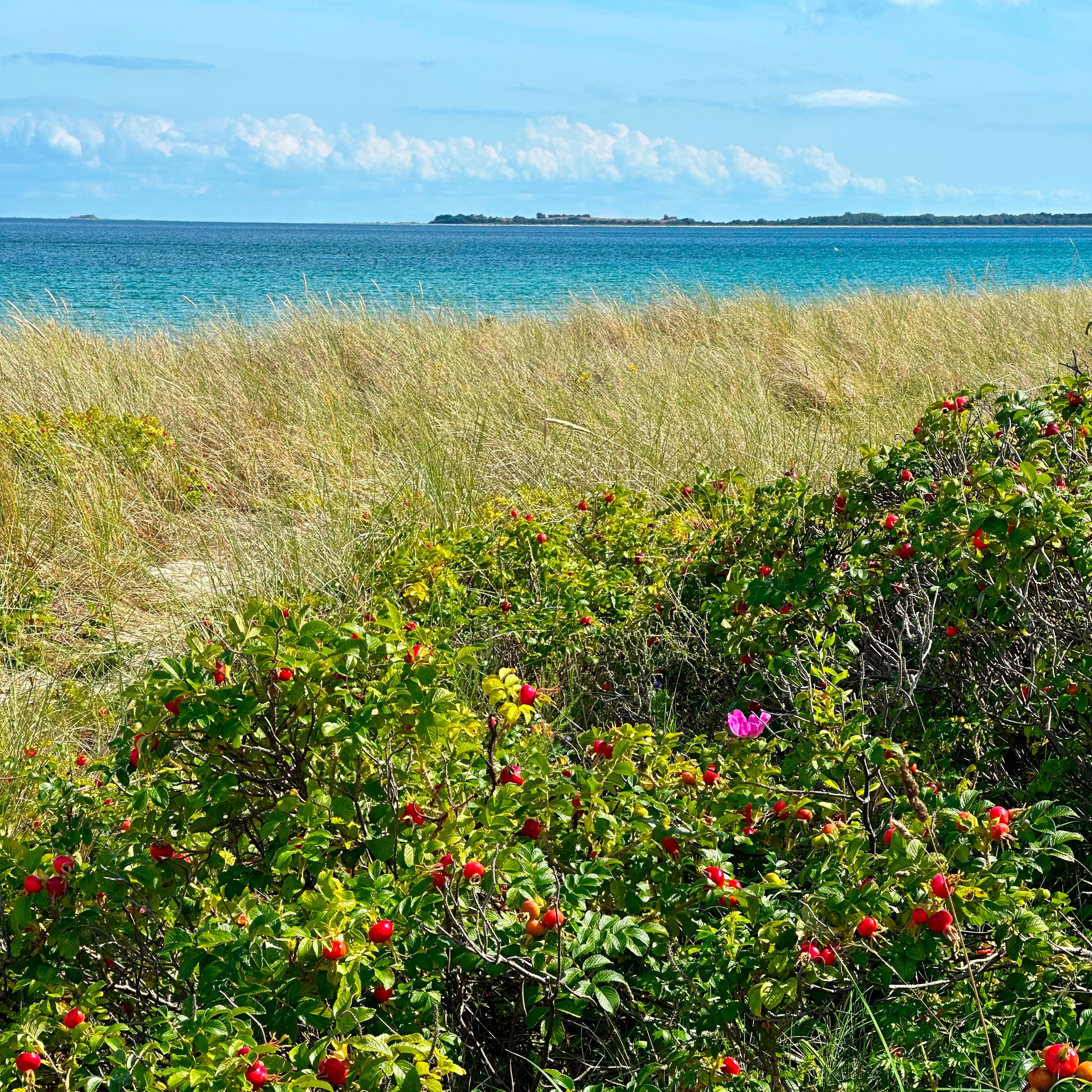
We were late to the beer tasting, in the woman’s husband’s workshop. The husband, a former graphic designer of twenty-five years with a bushy white walrus mustache, had assembled on his worktable a phalanx of beers, whose labels he had designed, and which their daughter had painted. Around the table sat one small glass for each of us. He poured us a taste of each one while the French girl hounded him for the story of how he and the woman first met. “In a porn club,” he said. “What’s a porn club?” somebody asked. “Like a strip tease,” someone else explained. Nobody believed that. “Why won’t you tell us?” “Because you want to know!” A pause. “On the last day,” he said, “I will tell you.” Everyone looked pleased. Then I asked: “Whose last day?” He gave me an amused look. “The last day of the last WWOOFer we ever have.”
The Swiss woman that evening held court at the dinner table describing the twenty-two jobs she had worked in forty-one years, of which her favorite, she told us waving the minuscule chunk of a salted vegetable on the tip of the fork in her left hand, was movement therapy for mentally ill incarcerated people. “Not everybody mentally ill killed someone,” the French girl, who disliked the Swiss woman deeply, grumbled. “They came from their environments,” the Swiss woman replied simply. “They lacked community—often, a mother. I was a mother of a kind to them, my boys. I call them ‘my boys.’” At a certain point later in the evening she looked around at us. “Which one of you,” she asked, “is trying to be an artist?” Heads swiveled. Someone must have mentioned it. “It’s me,” I said. “What kind of art do you want to make?” “I’d like to be a writer,” I said, with that usual, terrible blush. “Was dis behindert?” she said curtly, and looked to my friend, who being German could translate: “What hinders you?”
My shift the next day began late morning. I had only half an hour of cutting memory games out of old ice cream boxes to bring back to the WWOOFer house before the woman called on me to set the table for lunch. “Do you know what this is called?” she said, standing at the head of the table looking down over the casserole made of leftover potato salad, soup, and a bunch of eggs, around which the eight of us now sat. “Cleaning the fridge.” I spent the afternoon on dish duty.
It was on this day that the incident happened. The woman had sent me out to the chicken coop with an enormous pot of hot cooking water for the chickens to drink. They flocked to the gate when I came and rushed in front of me. I struggled to see beneath the pot and slowly, carefully though I moved I stepped gingerly and heard a terrible squawk. All the other panicked chickens fled. This one lumbered over to the mud, where it sat, one wing strangely extended. Had I stepped on its body? Its claws? I poured the water out for the others and looked for it; it had hobbled into a bush, where it hid.
I ran into the kitchen and found the woman standing over the sink. “I think one of the chickens is hurt,” I said. “Why do you think that?” “Because I stepped on its . . . foot, I think, bringing the water out.” She smiled at me the way you smile at a child fretting over an injured doll. “It takes a lot more than that to hurt a chicken,” she said, and she sent me back out behind the café to hang the laundry on the clotheslines next to the coop. The mellow clucking coming from behind the gate suddenly sounded like cries of pain. The dog came out and pressed his face against the mesh; I was certain he smelled death. Later, after cleaning all the dead bugs from between the windowpanes and scrubbing all the dirty surfaces in the kitchen, an Austrian girl and I took a basket of food scraps scraped from the plates back to the chicken coop. The injured one hopped out from the bush on one leg. Picking blackberries that evening on the north side of the town, I told the others what had happened, but rather than pity me—or the chicken—everyone laughed.
I was hungry that night. It was day two of zucchini stew for dinner with a little bit of leftover spaghetti and some hard-boiled eggs. This was not the glamorous veganism of my urbanite “green living” crowd. There were no designer plant-based rainbow salad bowls. My Samsø diet gave the word “sustainable” new meaning. There was neither money nor convenience. There was what we had, and all of it shared. In the silence of the hungry table, a different French girl started to sneeze, and the Swiss woman piped up with a polemic on medications. Sickness, she said, is the body alerting you to spiritual disorder: “Trauma sits in the body, you know,” she mused. “Unlike humans, when animals experience a shock or a trauma, they shake.” Out of the woodworks crawled one of the heretofore-indifferent people I’d told about my crime over the blackberries: “Like the chicken.”
Later that evening, while I wrote on the couch, the other WWOOFers discussed their music taste—how most of it was Anglophone. “Only old people in Denmark listen to Danish music,” the intern, the only Dane who lived with us, explained. “Not young people so much. But there’s this one guy, he just wrote a song in Danish about how it’s okay for men to cry.” “That’s a good message,” an Austrian girl said. “Yes, a very good message,” the Dane replied. “Then, he published a book of poems with a picture of his penis on it.”
It rained on the first day I was meant to work the fields. The husband stuck me and another WWOOFer in an abandoned room of the house disinfecting insect-infested planks of wood and pallets with industrial ketchup buckets of homemade acid wash. Every once in a while, we’d shift a pallet, and a plume of frantic spiders would emerge. At lunch, the woman brought out mountainous pulled-pork sandwiches and a cake filled with freshly picked berries. I devoured my sandwich, famished, without hesitation. It was my second time eating pork, something even in my more flexible moments I never touched, since I had arrived. I wanted a filling meal, wanted energy to run again, wanted my low perpetual belly ache to subside. The vague image of the pig skin floated across my mind. What word had I used—“innocent”? My friend, again, declined.
I passed my afternoon shift carrying twelve-packs of beer from the storage room, labeling each bottle, and stacking the re-packaged boxes in the hall between the kitchen and the till on pain of “Ten times clean the bathroom” should I fail to stack them right. I came out, once, with two boxes stacked in my arms. The woman smacked my butt. “One at a time,” she said. “In Denmark, it is illegal to do heavy lifting multiple times in a row. We have a law for everything for Denmark,” she added when I looked surprised. “Good and bad.” I squatted and removed the second box. We talked a little more, and I told the woman I might like to work as a journalist. She frowned at me. “Please be a good one. They talk about bad weather, bad weather. One called me up the other day to ask me how the rains affected me, I said we haven’t had a full day of rain all summer, only showers, it’s just fine, he said Hm, maybe I’ll call you back another day. Don’t do that.”
After my shift, I ate some bread one of the French girls had made and sliced strips from a block of cheese so enormous it would probably be illegal for the woman to ask me to carry it around. The next morning, the woman arrived, thank heavens, with surprise armfuls of milk, skyr, and eggs, and I happily ate my bowl of yoghurt with fruit and seeds and things. I managed to find a non-broken bike from the pile in the yard to ride with the others to the fields, where we found the husband patrolling a patch of un-weeded vegetables. He handed the old hands their hoes and beckoned me into his large red tractor for a tour.
On the way to the fields, we passed a red-and-white barnhouse, which the husband told me was a Protestant church. I asked if everyone on Samsø shared this religion. “Most people in Denmark don’t believe in anything,” he said. “They go to church for the wedding and when something is dead.” At Møgelskår, he brought me out of the tractor and introduced me to the goats. First the mother, then two three-week-old babies. He pointed to a stern-looking bearded one in a separate enclosure, just to the right. “That’s the dad; he’s not always so friendly,” he said. “We keep him separate because he would eat the little ones. They do it so they can try again and again and again.”
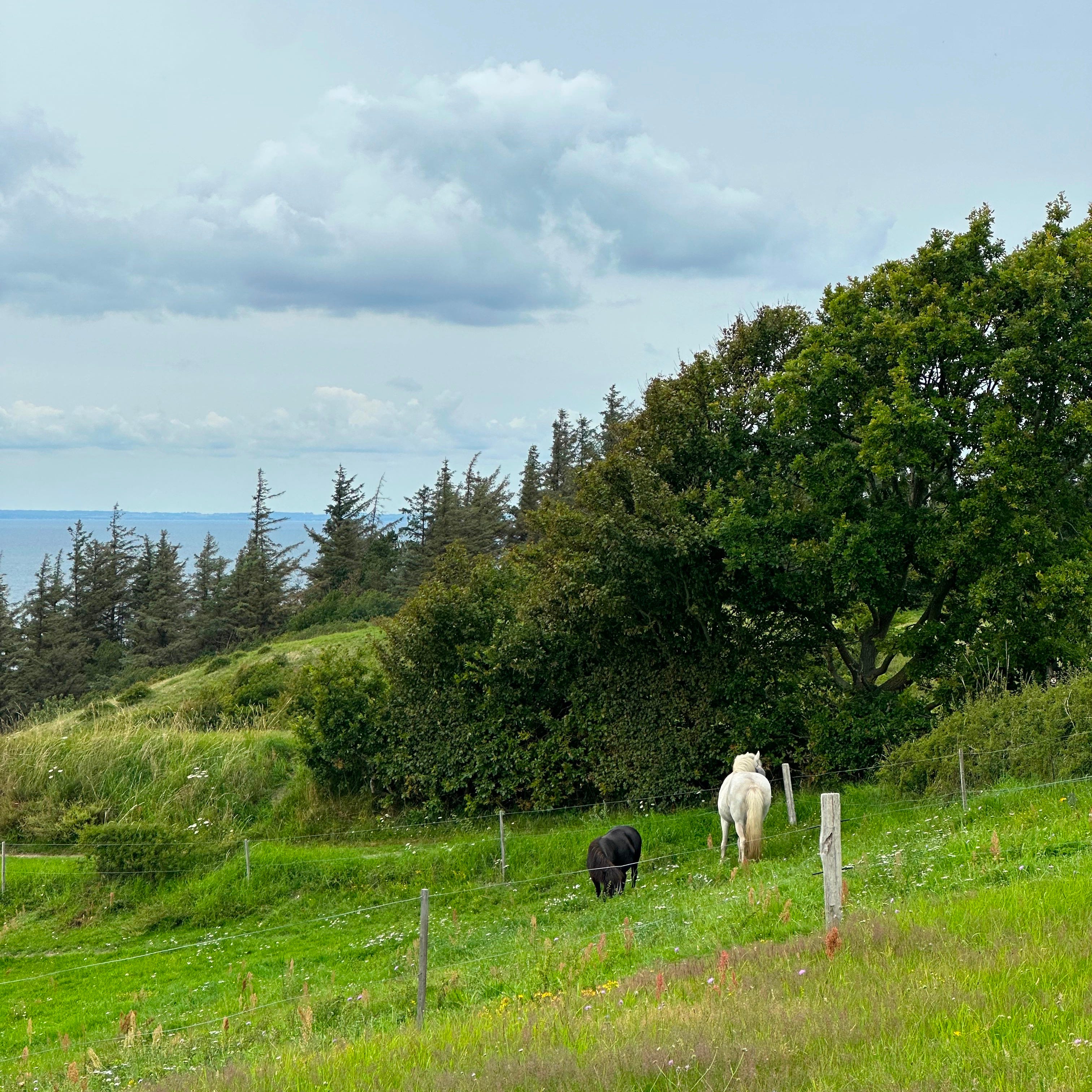
At the top of the hill, he pointed to a ramshackle tractor in blue. It had neither doors nor a roof. “This is my favorite one,” he said, “because it’s so little.” The wind blew wildly as we overlooked the sea. He pointed out a close-by island: “Sixty people live there in the winter times,” he said. “And this little house here, we own also. Once, we had an American boy called Connor. There were six or seven girls in the WWOOFer house, so he would come to sleep here for some peace. The girls called him ‘Crazy Connor’ because he lived in the shack.”
Walking back down the hill, he gestured to the rocks. “Samsø had no rocks of its own originally. All of these came eleven thousand years ago, when the ice melted.” “Eleven thousand?” I said. “Yes, so before my time, a little bit.” He laughed at me holding my bucket hat in the wind. “This weather also can be great,” he said as his little whisps of hair flew furiously around. “It reminds you of the power of the nature.” We passed the goats again on our way back to the red tractor. “One year we had eighty-five milking ones, so over two hundred little ones. And our children always picked”—he bent over like a toddler and scooped up an armful of air—“their fa-vo-rite goat.” He smiled.
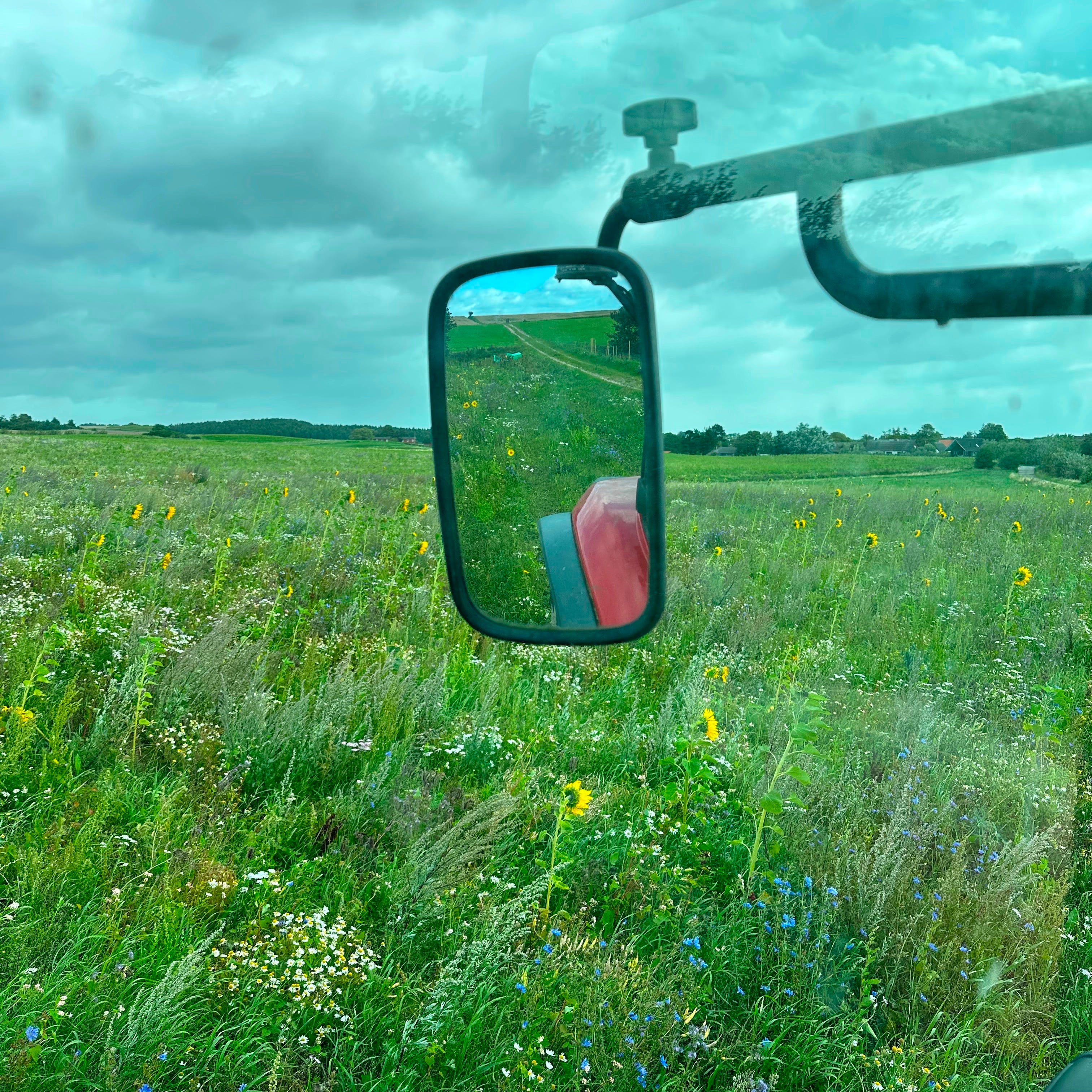
We passed, in the tractor again, a field of wildflowers, which the government had required the husband plant in exchange for money for the farm. “It’s to help the nature,” he said. “Most of our land is for farming. These are good, they bring insects and such. And it’s very pretty. I planted them last year.” We rounded a corner and pulled back into the field where the others were weeding and picking. “And speaking of politics,” he said, pointing to a ramshackle outhouse painted white: “this is my White House.” The sun had come out by then.
I weeded with a hoe and on my knees with my little gloved hands until lunch. Orange ladybugs peppered the leaves I tore away. The wind was too strong to ride our bikes after lunch, so we walked for a while to a further field at Møgelskår. The next day, it was the same—weeding—and sprinkling chickenshit to fertilize. Then it was a longtime French WWOOFer’s last day on the farm, so the husband gave us a tour of his brewery upstairs. He had built it himself. He showed us the vats in which he prepared and flavored the beer, what he called his “warship” where he cooled the beer, and the jugs in which he left it, full of yeast. “All the shit is sleeping at the bottom,” he said, “and really sleeping. They have nothing to do. No sugar! So sad. Then I put some sugar in, and they all wake up. Yay! It’s a party! And that is how I do it.” We each picked a beer to drink in the workshop while a playlist of music representative of our departing friend’s cultural heritage ran over the loudspeakers, mostly Edith Piaf singing “La Marseillaise.” Eventually the husband tired of this and switched to an album by the Danish rock group Gasolin’; among my favorite songs: “Rabalderstræde.”
It was now our last day on the island. The day went weeding lettuce hardly distinguishable from the weeds. I was terrified I’d choose poorly between what to kill and what to keep, so the whole job was agonizing. After lunch, the husband told us not to return to the fields but to stay near the café to pick some berries from the bushes in the front. Passing customers asked me several times what the berries were called, and I had to admit each time I didn’t know. I asked the husband for the English word for them when he came out to beckon us back into the kitchen with our buckets. “Amonia,” he said. “I don’t think it’s English or Danish. It’s Latin.” After a few paces, he stopped and turned back to me. “They’re ve-ry good for your health. Lots of antioxidants. And they say”—and here he winked—“it’s good for the sex life. That’s why my wife had me plant so many bushes.” After a pause and a laugh: “It didn’t work.”
Our next and final task was to corral the chickens to the far side of the coop, dig up their barbed-wire fence, and re-enclose them. Convincing three chickens to walk thirty yards west proved an impossible task for our collective intelligence. For all our chasing and begging and laughing in the bushes where they hid, the chickens did not budge. The husband ended up plucking each one up by the wings and frog-marching them across the grass. While we struggled with the fence, I heard a squabble at the edge of the enclosure. One of the chickens was attacking another one’s neck. I shouted for the husband. “Why are they fighting?” I asked. “Oh,” he said, with a shake of his head. He walked over, picked the victim up by the wings, and threw her over the fence into the garden. “My wife tells me somebody trod on one of them”—and here I interrupted him, humiliated. “It was me,” I said. “Well,” he said, “the others can sense it when one of them is weaker. And then they attack.” A pause. I said nothing. Why did it upset me so much more to feel accidentally responsible for a chicken’s slow mauling by its own kind than to eat a pig the woman had just slaughtered? What was the difference, in the final count? The husband continued, “It’s a hard world.”
He then bribed us with the promise of a barbecue to carry the chicken coop from one end of the garden to the other. This we did, and it took us half an hour. Then the husband made a bonfire. The woman appeared with a vat full of dough and sent me into the kitchen to retrieve the pot of boiled home-made sausages. I salivated over them in the dull, hungry hum of my subdued principles, despite the very pressing problem of the chicken and the guilt. The woman taught us to wrap long wooden sticks with dough and cook them over the fire, then put in the meat and, if we wanted, some cheese. Most people’s came out half-burnt and deformed, but mine was so good the woman asked me to make one just for her. I did, then when it was finished I wriggled her sausage inside. My friend sucked happily her hot, meatless dough and ate some cheese. Then the husband, who had until then refused to deviate from the porn club story of his meeting the woman, apropos of nothing embarked on a tale about a girl who used to show up at his swimming pool and ask to swim. “‘What about your family?’ I said. ‘They’ll come next time,’ she said. But they never did come. Each year, there she would be, swimming in my swimming pool. And still no family. Then I noticed she started growing up, and now we’ve been married for forty years.”
The many chickens again attacked the wounded one. Again, I winced. Again, the husband shook his head. The dog went after her, too. “I think she will be dead tomorrow,” the husband said. “We will eat her.” Everyone who had been laughing about the chicken story seemed finally to understand. Pitying hands touched my shoulders. “It’s not your fault,” everybody said. “You didn’t kill the chicken,” someone cooed, “it’s the other chickens who are bullying her because she’s weak.”
This thought, of the bullying, unsettled me most of all. The chickens turning on their injured own, the pig drinking the blood of their dead, the daddy goat killing his babies. Without the fantasy of animal innocence, would my inability to justify killing them for food finally be cured? It seemed to me: no. In fact, innocence as argument, even requirement, for sympathy as the basis of a vegetarian ethic struck me suddenly as farcical. To imagine an animal as a living thing is to understand that it is equally as capable of cruelty as it is of suffering. And if this is true, it is also to understand animals as not so different from humans—for are not violence and betrayal as much constitutive of what we consider “the human” as kindness and faith? What I mean to say is that we should not stop killing animals because they are inherently good; we should understand killing them for what it is: ending the life of another creature to extend our own, by necessity or, more often in my world, as indulgence. What life is the price of ours? Where I come from, the killing is so distant from us, so mechanized, we no longer identify it as such. It is as invisible—as alienated—as all the natural cost and human labor behind everything else we consume. But here this chicken was, alone in exile from her enclosure, nursing her twisted foot and now her neck wounds from the beaks of her once-friends.
“It’s my fault she’s weak,” I finally insisted, putting the question away. “She ran under you; you didn’t mean to,” someone said. I took a sorry bite. The husband overheard this and his eyes, otherwise obscured beneath his bushy eyebrows, went suddenly very wide. “You?” he said, and pointed to me. “Oh no. This is life. It is hard. We will eat them anyway.” He took a sip of his beer and looked at the burrowing dog angling to crawl under the fence into the coop.
Brilliant!
this was stunning...should I abandon everything and WWOOF?